

The goal-setting process—some love it, others skip it with an eyeroll.
Honestly, I was never a big fan of it in my corporate days, and I recently realized why—we never got it right. Oops.
I rediscovered goal-setting in my solo work with clients. But it wasn’t in the beginning. We would spend months working together, building better brand and marketing strategies and experimenting with different tactics, until inevitably, one day, we would ask ourselves, “So why are we doing this? What is the goal?”
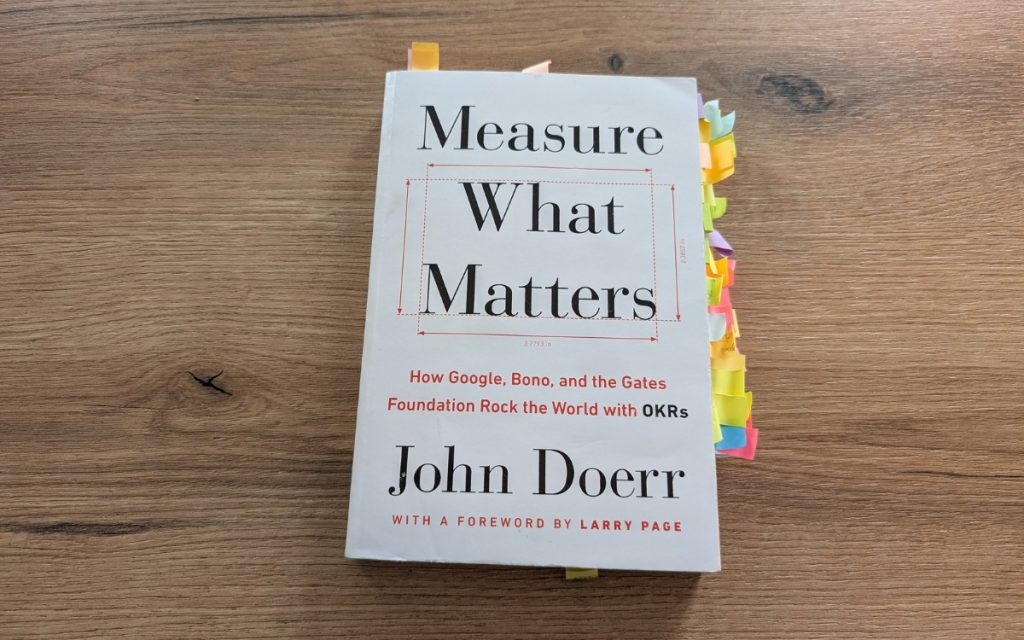
That’s when I realized we weren’t using the right goal-setting process from the start. Sure, we would ask the question “What is the goal?” or “What’s the main reason to start this project?” but we never really put everything down in a structured way. After coming across Measure What Matters, I adopted the OKR method in my work with clients.
This made things so much clearer and more structured. However, paradoxically, I only started seriously setting goals for my personal brand and business years after I began doing it for my clients.
If you’re also your own worst client, I can’t overstate this: the time you spend planning and setting goals is the best investment you can make in your business.
Here’s my three-step goal-setting process for business owners and freelancers that would help you make the shift to the middle part of the Venn diagram below.
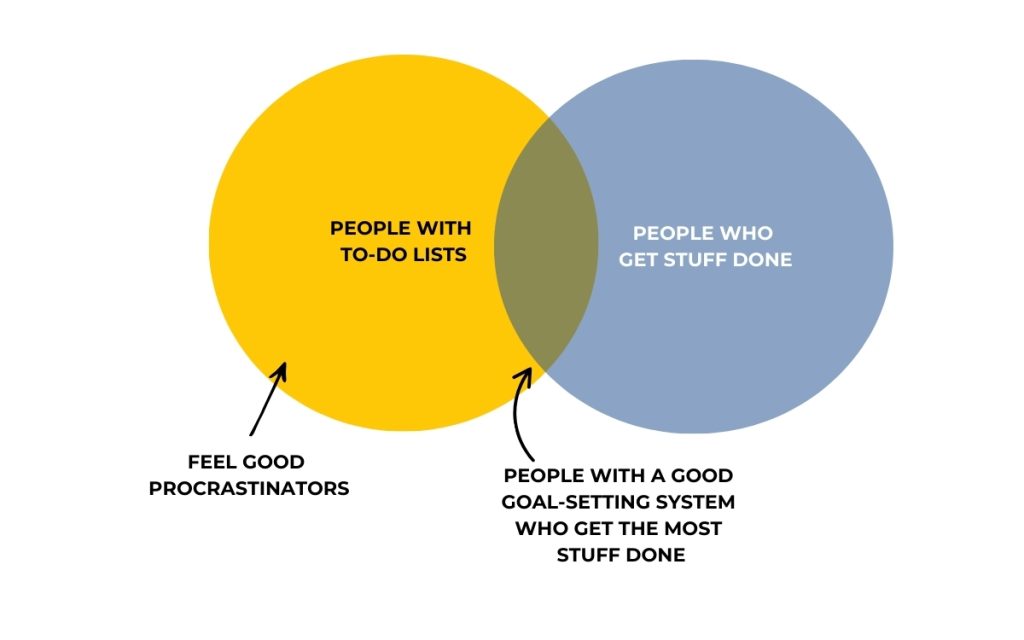
Step 1. 3 Words for the year
This is a concept shared by Chris Brogan. Here’s how it works:
You choose three meaningful words that will guide your decisions throughout the year. For each word, ask yourself: Will this word help me move forward in the right direction?
Your words should reflect:
- Who do you intend to be
- What you want to focus on
- How you want to approach your work and decisions
The key word here is Decision. When multiple different projects, offers and overheard tactics come your way throughout the year, the three words help you filter them, stay grounded, and make better choices.
Chris has been using this exercise since 2006 and has observed that certain words don’t work well for most people. Focus is one of them, and you can check his other insights in this video:
Step 2. The Good Time Journal
I came across the Good Time Journal in this Personal branding course by Vassilena Valchanova, a concept from the book Designing Your Life by Bill Burnett and Dave Evans.
How It Works
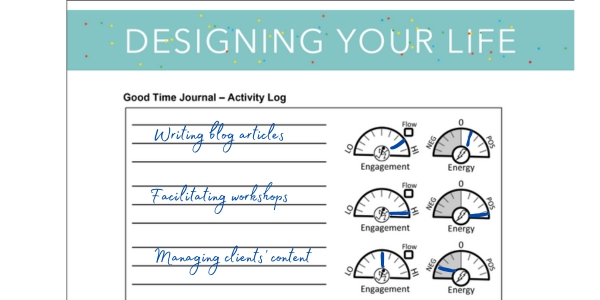
For one or two weeks, track your different work tasks and assess them based on two key factors:
✅ Engagement – how involved or “in the zone” do you feel?
✅ Energy – does the task give you energy, or does it drain you?
At first, I thought: “Well, everything drains me—isn’t work supposed to feel exhausting?”
But this exercise opened my eyes. I started paying attention to what felt hard yet fulfilling. Even if such a task left me tired, it was still energizing in its way.
If you want more details on how to track your mood in relation to your work, check out this video from Matt D’Avella.
Once I had enough data, I could plan my work better—I knew which tasks I enjoyed and I could structure my workday around them.
Step 3. Measure What Matters with OKRs
Once I had my three focus words and a clear sense of what energized me, I could finally turn those insights into a strategy.
If you’re like me and believe that one well-executed idea is worth more than a dozen unexecuted plans, the OKRs method will be your new favorite tool.
What Are OKRs?
OKRs stand for Objectives and Key Results.
- Objective (O) → The WHY: It aligns with your big vision but focuses on a smaller time frame (e.g., one year, one quarter, or one month). It doesn’t need to be too specific or numerical—just clear.
- Key Results (KR) → The WHAT: These are measurable outcomes that track progress toward the objective.
One crucial insight I learned from the same course I mentioned earlier is that you should measure not just outcomes but also the actual work that leads to them. Especially when you are just starting, it is more important to focus on the input in the work, and not so much on the results that you cannot control (impressions, following etc.).
This means using two types of Key Results:
1️⃣ Input Key Results – the work you put in (e.g., “Publish 2 LinkedIn posts per week.”)
2️⃣ Output Key Results – the result you expect (e.g., “Gain one new lead per month.”)
At the end of the quarter, I review my results and analyze:
- If I haven’t achieved the outcome metric I have planned for, I check first if I actually completed the work. If not, I know that in the next period I need to focus on execution.
- I also take a pause to reflect why I didn’t complete the work:
➡️ Was I unrealistic about the volume of work I plan to do?
➡️ Was it too energy draining, so I didn’t want to do it?
➡️Were there other reasons standing in my way to finishing the work?
- If I have finished the work but haven’t seen results, then I know I need to adjust my strategy.
The OKRs force you to get clear with your goals in a non-judgemental way.
Example OKRs for Brand Awareness
Instead of saying, “We need more brand awareness,” build it as an OKRs system:
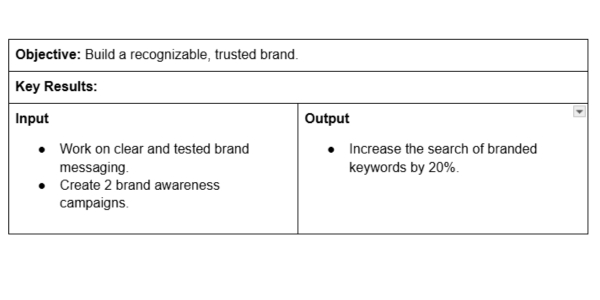
OKRs aren’t just a system—they’re a mindset shift. They push us to focus, track progress, and achieve ambitious goals. As Measure What Matters author John Doerr says:
“What gets measured, gets done.”
Want to build a working system for your brand and marketing goals? Contact me and let’s get started.

